
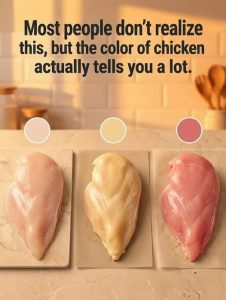
When you’re standing in the grocery aisle, it’s easy to pause over the chicken display. One package looks pale and almost pink, while another has a deeper yellow tone. They’re the same cut and close in price, yet the difference in color raises questions. Many shoppers instinctively assume that darker or yellower chicken is healthier or more natural, while paler meat seems less appealing. In reality, color alone rarely tells the full story. With chicken, appearance can be influenced by many factors that have little to do with safety, nutrition, or overall quality.
In most supermarkets, pale chicken is the result of standard commercial farming practices. These birds are typically raised indoors, bred to grow quickly, and fed carefully formulated diets designed for efficiency and consistency. This system produces affordable meat with a mild flavor and uniform appearance, which is why pale chicken is so common. While some people associate lighter meat with lower quality, it is generally safe and nutritious when properly handled and cooked. The color reflects the production system more than it reflects freshness or health value.
Yellow-toned chicken, on the other hand, is often linked to diet. Feed that includes corn or other natural pigments can deepen the color of the skin and fat, creating a richer yellow hue. Birds that grow more slowly or have more space to move may also develop firmer meat and a slightly stronger flavor, which some consumers prefer. However, it’s important to remember that color can be influenced intentionally. Some producers adjust feed formulas specifically to create a yellower appearance because shoppers tend to associate that color with traditional or higher-quality chicken, even when the living conditions are similar.
Because of this, relying on color alone can be misleading. A better way to evaluate chicken is to look beyond appearance. Labels such as organic, pasture-raised, or Certified Humane offer more meaningful information about how the animal was raised. Freshness indicators—like a clean smell, firm texture, and clear packaging dates—are far more reliable than color. In the end, there is no single “best” color of chicken. The right choice depends on your values, taste preferences, and how much importance you place on farming practices. Color is simply one small clue in a much bigger picture.